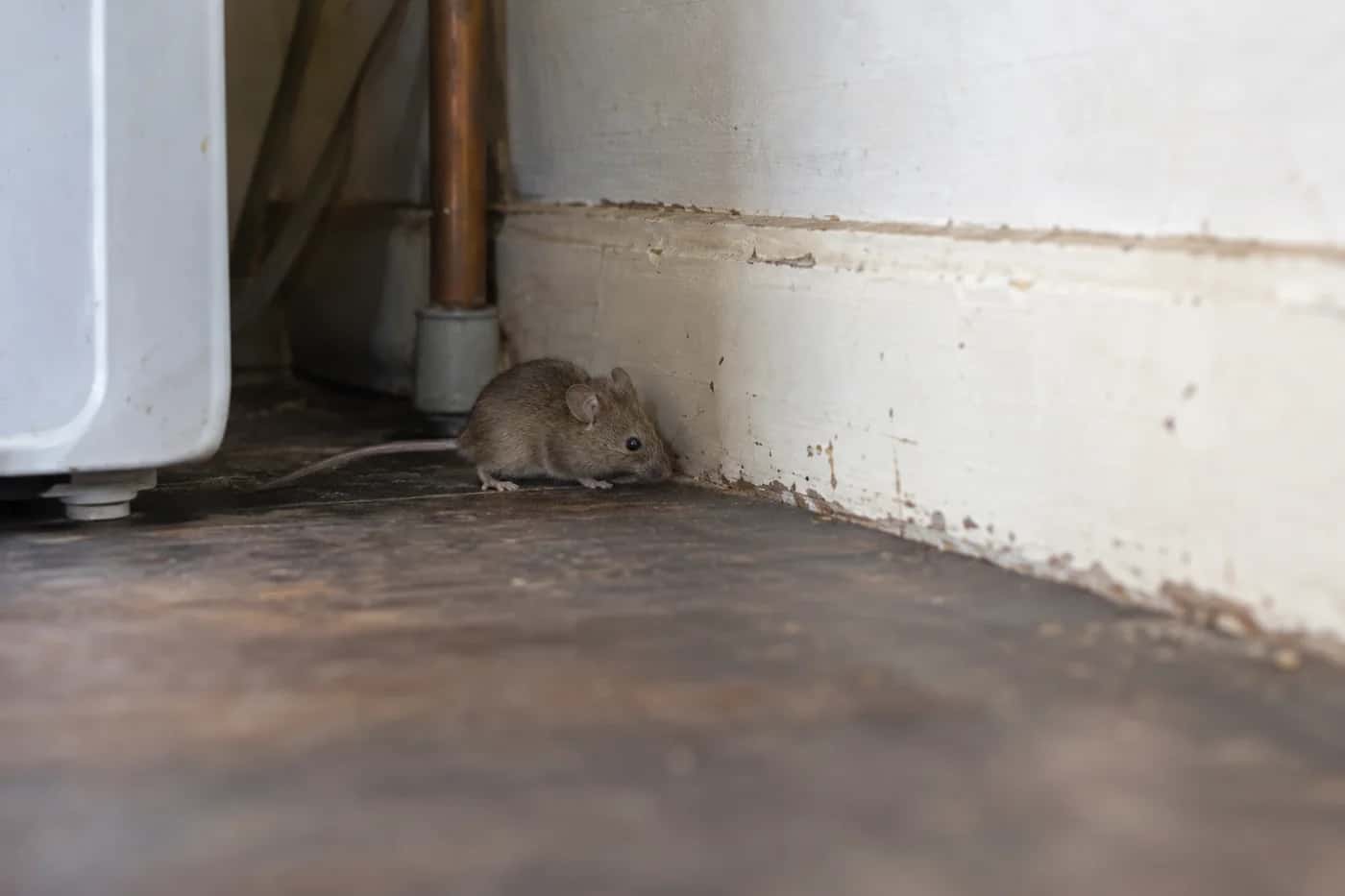
Signs of rats or mice
Droppings are usually the first sign. Mouse droppings are small, about the size of a grain of rice; rat droppings are noticeably bigger. Look along skirting boards, in the back of cupboards, behind the fridge and in the roof space.
Other signs are gnaw marks on food packaging, timber or cables, greasy smudges along walls where they run, shredded paper or insulation used for nests, and scratching in the walls or ceiling at night. Note where and when you notice each one. It helps the provider decide where to look first.
Rat, mouse or possum? Telling them apart by the noise
Rats and mice make quick, light scratching and scurrying sounds, often inside wall cavities as well as the ceiling. A brushtail possum is about the size of a cat, so it usually sounds like heavy thumps and footsteps across the roof after dark.
Getting this right matters because the two are handled very differently, and possums are protected wildlife in Victoria. If it sounds bigger than a rat, read possum assessment in Brunswick before anyone sets bait or traps.
Is rodent baiting safe around children, pets and wildlife?
Rodent baits are poisons, and the national regulator, the APVMA, says they're toxic to people and animals if they aren't used exactly as the label directs. Bait should be kept where children, pets and other animals can't get to it.
Pets and native animals can also be poisoned by eating a rodent that has eaten bait. The APVMA notes this risk is higher with the stronger single-dose baits (second-generation anticoagulants) than with the older multi-dose types. From 24 March 2026 the APVMA suspended the registration of second-generation anticoagulant baits for one year, and during that time they can only be supplied and used under the conditions it has published.
Before agreeing to a treatment, ask the provider which bait they plan to use, where the bait stations will go, whether the stations are tamper-resistant, and whether trapping is an option for your home. If someone swallows bait, call the Poisons Information Centre on 13 11 26. If a pet eats bait, call your vet straight away.
How much does rodent control cost?
It depends on how big the problem is, how many areas need treating and whether entry points need closing. The provider quotes after the inspection, and you agree the price and what's included, such as follow-up visits, before any work starts.
Sources: Rodenticides, APVMA; APVMA announcement on second-generation anticoagulant rodenticides, 10 March 2026.